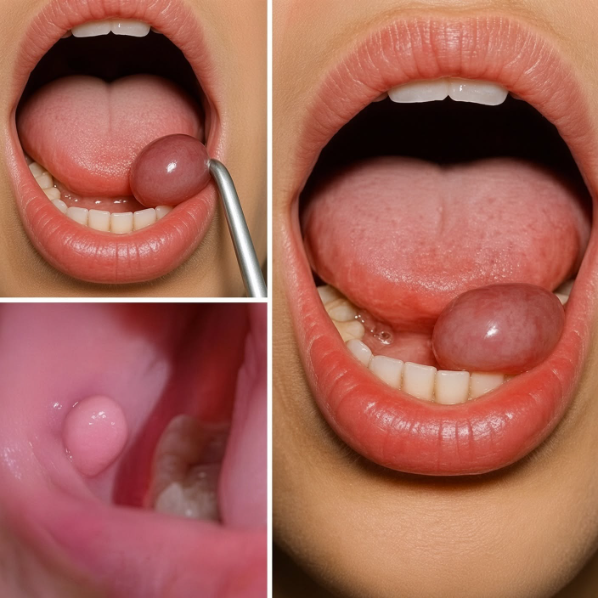
An oral mucocele is a soft, fluid-filled swelling that develops inside the mouth. These harmless bumps are quite common and typically appear on the inner surface of the lower lip, though they can also develop on the tongue, roof of the mouth, or inside the cheeks. As observed in these swellings often present a smooth, dome-shaped appearance with a translucent or slightly bluish hue.
When a similar swelling occurs specifically on the floor of the mouth under the tongue, it is clinically referred to as a ranula. Regardless of the location, these bumps are primarily composed of accumulated saliva that has escaped from a nearby salivary gland.
The development of these oral fluid collections is usually linked to minor trauma or localized blockages affecting the minor salivary glands. The most frequent triggers include:
Accidental Biting: Accidentally biting the inner lip or cheek while chewing food is the leading cause of duct disruption.
Habitual Sucking or Nibbling: Frequently sucking on the inner cheeks or biting the lips out of habit can cause ongoing minor irritation.
Physical Trauma: Impact injuries to the face or mouth from sports or minor accidents can damage delicate oral tissue.
Duct Blockage: A microscopic blockage, such as a tiny mucus plug or localized inflammation, can restrict normal fluid drainage.
Recognizing these harmless swellings involves looking for specific physical features. They are generally distinct from other types of oral lesions:
While small swellings often go unnoticed, larger ones—especially a ranula under the tongue—can temporarily interfere with normal speech, comfortable chewing, or effortless swallowing.
Most minor oral mucoceles are self-limiting and resolve naturally as the fluid safely reabsorbs or the tissue heals on its own. However, professional evaluation by a dental specialist or oral care provider is recommended under certain circumstances:
Persistent Swelling: The bump lasts for more than a few weeks without decreasing in size.
Functional Interference: The size of the swelling actively interferes with eating, talking, or swallowing comfortably.
Recurrent Bumps: The area repeatedly fills up, ruptures, and reforms in the exact same location.
Dental professionals can accurately evaluate the area and provide appropriate management options, which may include simple monitoring, specialized laser applications, or minor procedural removal to prevent future recurrence. Avoid any attempts to squeeze, pop, or puncture the swelling at home to prevent irritation or secondary issues.


0 comments:
Post a Comment