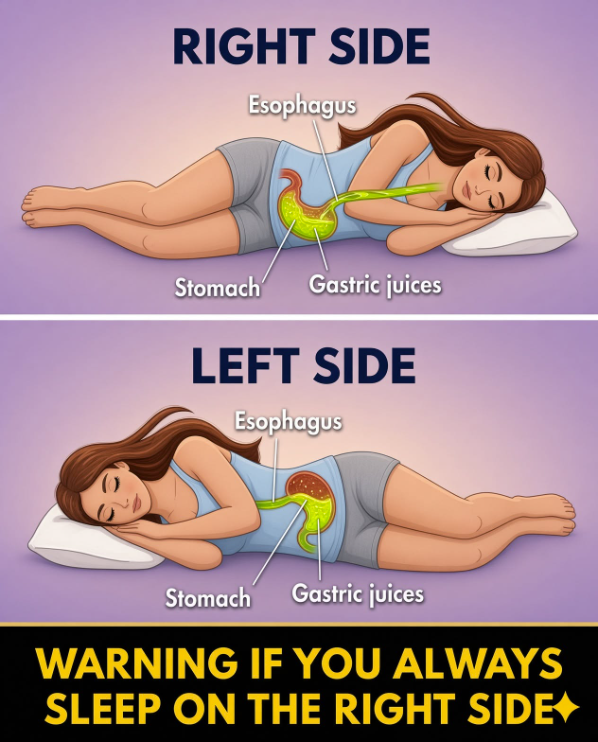
People often choose a sleeping position without giving it much thought. Some prefer sleeping on their back, while others naturally roll onto one side. Recently, social media posts have claimed that sleeping on the right side is harmful and that everyone should switch to sleeping on the left. While there is some scientific evidence that body position can influence certain health conditions, the reality is far more balanced than many viral headlines suggest.
One of the main reasons left-side sleeping is frequently recommended is its potential effect on acid reflux. The stomach naturally sits slightly toward the left side of the body. When a person lies on the left side, gravity may help keep stomach contents away from the lower esophageal sphincter—the valve between the stomach and esophagus. This may reduce the chance of stomach acid flowing upward into the esophagus, which can lessen nighttime heartburn for some people.
In contrast, sleeping on the right side may make reflux symptoms worse in certain individuals. Researchers believe this occurs because the stomach’s position may allow acid to reach the esophagus more easily while lying on the right. However, this does not mean sleeping on the right side is dangerous for everyone. Many healthy people sleep comfortably on their right side without experiencing any digestive problems.
For individuals with gastroesophageal reflux disease (GERD), doctors often recommend trying left-side sleeping as part of an overall management plan. Other lifestyle measures, such as avoiding large meals within three hours of bedtime, limiting alcohol, maintaining a healthy weight, and elevating the head of the bed, are often even more important than sleeping position alone.
Sleeping position may also influence other aspects of health. During pregnancy, particularly in the later months, many healthcare providers recommend sleeping on the left side because it may improve blood flow between the mother, placenta, and baby while reducing pressure on major blood vessels. Even so, experts also reassure pregnant women that changing positions during sleep is normal and usually not harmful.
People with obstructive sleep apnea or heavy snoring may benefit more from side sleeping in general rather than sleeping flat on their backs. Side sleeping can help keep the airway more open during sleep, reducing airway collapse in some individuals. Whether the left or right side works better often depends on personal comfort and underlying medical conditions.
For people with heart disease, chronic shoulder pain, recent surgery, or certain lung conditions, the best sleeping position may vary. Some individuals with shoulder injuries naturally avoid sleeping on the affected side, while others with specific heart or lung conditions may receive individualized advice from their healthcare provider. There is no universal “perfect” sleeping position that applies to everyone.
Comfort remains one of the most important factors for healthy sleep. A supportive mattress, a pillow that keeps the neck aligned with the spine, and maintaining a consistent sleep schedule often have a much greater impact on sleep quality than choosing one side over the other.
If you frequently wake up with heartburn, chest discomfort, coughing, or a sour taste in your mouth, it may be worth experimenting with sleeping on your left side while also discussing persistent symptoms with a healthcare professional. However, if you sleep comfortably on your right side and have no symptoms, there is generally no evidence that you need to change your preferred sleeping position.
Good sleep habits involve more than body position. Limiting caffeine late in the day, avoiding heavy meals before bedtime, reducing screen exposure in the evening, exercising regularly, and creating a cool, quiet sleep environment all contribute to better rest.
Ultimately, sleeping on the left side may offer meaningful benefits for people with acid reflux and certain medical conditions, but sleeping on the right side is not inherently harmful for healthy individuals. Rather than believing alarming online claims, it is best to consider your own symptoms, overall health, and medical advice when deciding which sleeping position works best for you.



0 comments:
Post a Comment