Top Ad 728x90

Saturday, September 26, 2026

11.59 Acres Lot 3 Bed

by

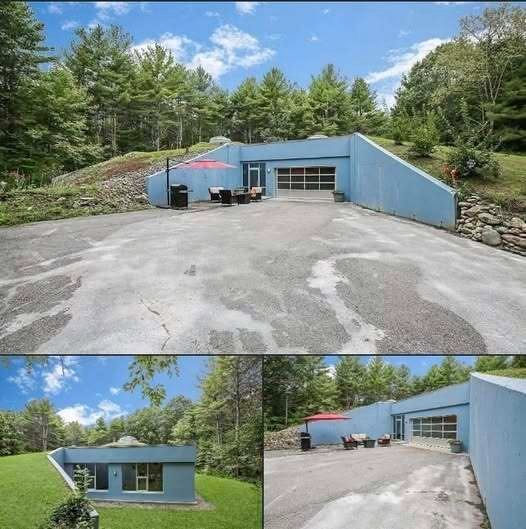
Nestled on an expansive 11.59-acre property, this unique retreat offers an exceptional combination of privacy, security, and innovative subterranean design. Surrounded by dense woodland, the secluded setting provides a rare sense of peace and isolation.

The three-bedroom, three-bathroom home is built directly into the natural contours of the hillside. Designed to blend with its surroundings, the earth-sheltered structure remains discreetly tucked into the landscape, creating a private retreat hidden from view.

Distinctive soft-blue concrete retaining walls frame the wide paved driveway and entry patio, adding character to the property’s rugged setting. Large glass doors and an overhead garage door create a seamless transition between the sheltered interior and outdoor areas.

The property also features practical outdoor gathering spaces, including an umbrella-covered seating area positioned alongside the retaining wall. These spaces provide comfortable spots for relaxing, entertaining, or enjoying the surrounding woodland.

Above the residence, the grassy hillside continues across much of the roof, helping the structure blend naturally into the terrain. Round skylight domes punctuate the landscape, bringing daylight into the subterranean rooms and creating a bright, inviting interior.

Large multi-pane windows along the exposed facade further enhance the home’s connection with the outdoors. Despite its underground construction, the living areas benefit from abundant natural light, open views, and spacious interiors designed for everyday comfort.

Built with reinforced concrete walls and ceilings, the structure incorporates heavy-duty engineering intended to withstand demanding conditions. Off-grid utility systems add another layer of independence, making essential amenities available even during unexpected disruptions.

Surrounded by more than 11 acres of natural terrain, the property offers ample opportunities for recreation, future expansion, or simply enjoying complete solitude. Combining modern living, resilient construction, and discreet architecture, this one-of-a-kind earth-sheltered retreat delivers privacy and functionality in an extraordinary setting.

Don’t Cheat! Pick a Nail

by

This text presents a personality-style interpretation based on choosing one of six purple nail designs. Each design is said to reflect different emotional, social, and behavioral tendencies based on instinctive attraction rather than overthinking.

If you chose Nail 1, it suggests quiet confidence and restraint. The simple, structured design is linked to someone who values stability, self-control, and understated elegance. This type of person is seen as reliable, composed, and not driven by attention or validation.

If you chose Nail 2, it represents emotional depth and sensitivity. The heart detail is associated with romantic, intuitive individuals who prioritize feelings and connection. This choice reflects someone compassionate, expressive, and sometimes emotionally vulnerable in relationships.

If you chose Nail 3, it reflects balance and calm logic. The design suggests a grounded personality that values stability and avoids extremes. People drawn to it are described as thoughtful, steady, and emotionally controlled while still caring deeply.

If you chose Nail 4, it indicates boldness and ambition. The larger, eye-catching gem symbolizes confidence, leadership, and a desire to stand out. This type of person is portrayed as goal-driven, competitive, and comfortable being noticed.

If you chose Nail 5, it suggests practicality with refined taste. The structured design reflects logical thinking, planning, and long-term focus. At the same time, there is an appreciation for aesthetics, showing a balanced mix of discipline and style.

If you chose Nail 6, it reflects independence and subtle strength. The minimal design suggests a private, observant personality that values control over personal expression. These individuals are often seen as hard to read but internally confident and self-reliant.

Overall, the concept emphasizes that such choices are not literal definitions of personality, but reflections of instinct and preference. They highlight tendencies in how people balance emotion, logic, attention, and privacy in everyday life.

In the end, the purpose is not to label you, but to suggest that even small, instant preferences can reveal patterns in how you think, feel, and present yourself to the world.

$65,000 3 Beds, 3 Baths

by

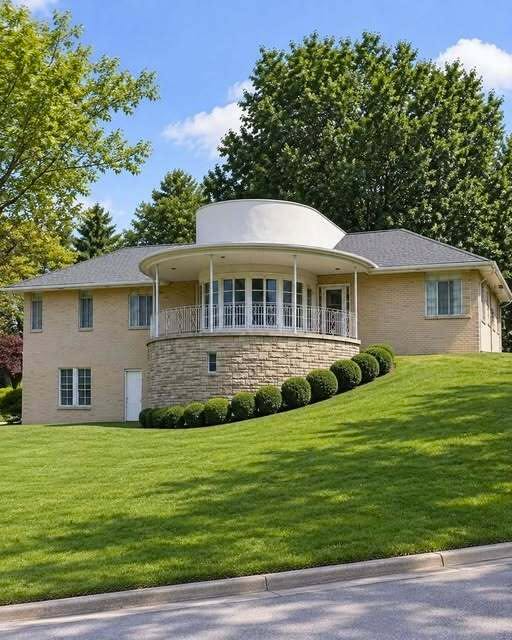
A strange house is waiting on a grassy hill, and nobody can quite decide whether it’s an incredible bargain—or a very expensive trap. Listed for just $65,000, the unusual property immediately stands out from everything around it. It looks less like an ordinary home and more like an observatory, movie set, or forgotten vision of the future.

The house offers three bedrooms, three bathrooms, and nearly 3,000 square feet of living space. Its most striking feature is the architecture: sweeping curved glass, rounded walls, and a tall cylindrical section that gives the property the appearance of a futuristic tower. It’s dramatic, unusual, and impossible to ignore.

Inside, however, the story becomes more complicated. The property is far from a polished, move-in-ready home. Instead, it feels like a project waiting for someone willing to take a serious risk. The rooms are spacious, the windows bring in plenty of natural light, and the unusual layout offers possibilities that a conventional house simply cannot provide.

The home’s Art Deco-inspired design gives it a personality rarely found in modern real estate. Its curves and geometric details suggest that whoever imagined it wanted something memorable rather than ordinary. But years of neglect have left that vision incomplete, creating a strange contrast between the ambitious exterior and the raw interior.

For the right buyer, that unfinished quality could be the biggest attraction. Rather than demolishing the unusual features, someone could restore the original character while updating the interior. Open spaces, dramatic lighting, modern finishes, and carefully preserved curves could transform the property into a genuine architectural statement.

But the $65,000 price tag comes with an obvious warning: the purchase price is only the beginning. Renovations, structural work, permits, utilities, and maintenance could quickly turn this bargain into a much larger investment. Anyone considering it would need plenty of imagination—and an even larger budget.

That is what makes the house so fascinating. It isn’t simply a cheap property waiting for a buyer. It is a gamble between preservation and reinvention, between seeing an unfinished disaster and recognizing hidden potential.

For now, the strange house remains perched above the quiet streets, its curved glass catching the light. It waits for someone brave enough to answer the question it seems to ask: tear it down, or finally give its forgotten dream a second life?

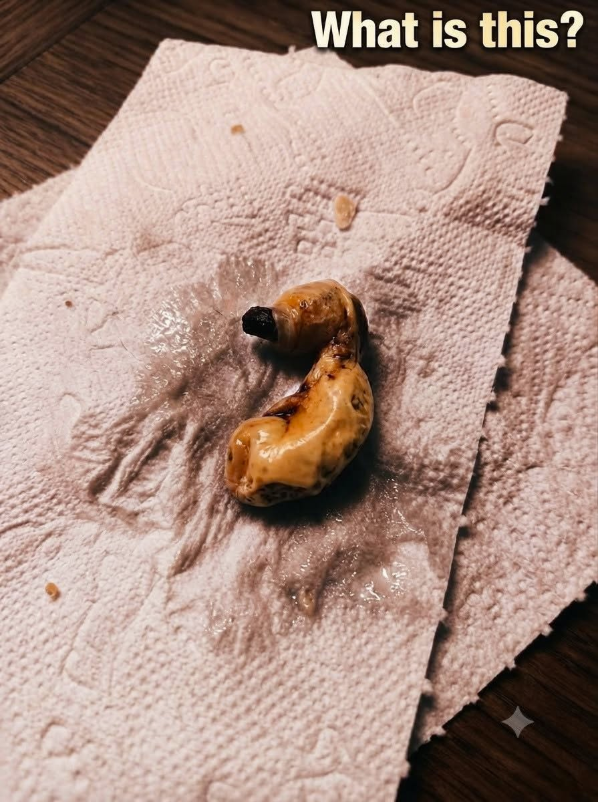
I found this strange thing

by

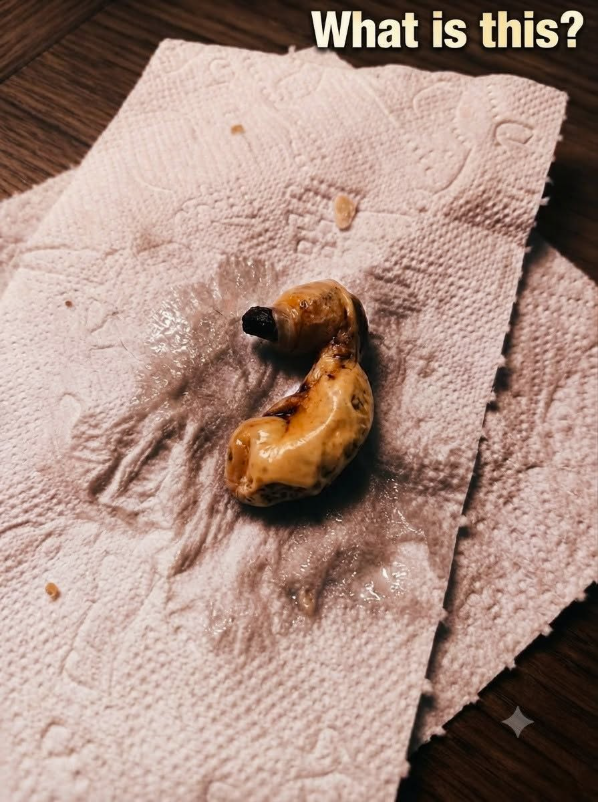
A single comment—“I think it’s alive”—completely shifts how people interpret an image. What was once just an unclear object suddenly becomes something threatening, and the brain begins reorganizing every detail to support that idea.

Curved shapes start to look like bodies. Dark areas resemble heads or eyes. Marks and textures become imagined veins or injuries. Even wet or shiny surfaces can feel organic. None of these interpretations were obvious at first; they are created by expectation, not reality.

This is a classic example of top-down processing, where what we believe influences what we see. The brain doesn’t just passively record images—it actively interprets them based on context, emotion, and suggestion.

That’s why the same blurry picture can produce completely different interpretations depending on what someone tells you. If you’re told it’s dangerous, your mind searches for threats. If you’re told it’s harmless, you stop looking for danger.

Humans are especially sensitive to this because we are built to detect patterns. This ability helps us recognize faces, animals, and threats quickly—but it also leads to false perceptions. We often see meaning in random shapes, a phenomenon known as pareidolia.

This is why people see faces in clouds, animals in rocks, or expressions in objects. The brain prefers meaningful structure over randomness, even when none exists.

When fear enters the equation, everything intensifies. Attention narrows, interpretations become more extreme, and harmless objects can suddenly feel dangerous. The emotional state essentially rewrites perception in real time.

That’s also why collective fear spreads so easily. In groups, people don’t just react to objects—they react to each other’s reactions. One frightened response can trigger a chain reaction, turning confusion into panic even without any real threat.

Online, the same mechanism scales up. A strange image can rapidly generate wild theories because dramatic explanations spread faster than simple ones. Mystery attracts attention, while ordinary explanations often get ignored.

In the end, the object is usually far less dramatic than the imagination suggests—often something ordinary like food residue, a shell, or debris distorted by lighting and perspective. The real lesson is not about the object itself, but about how easily perception can be shaped.

What feels like certainty in the moment is often just interpretation under the influence of suggestion, emotion, and expectation.

Built in 1945 4 Bedrooms

by

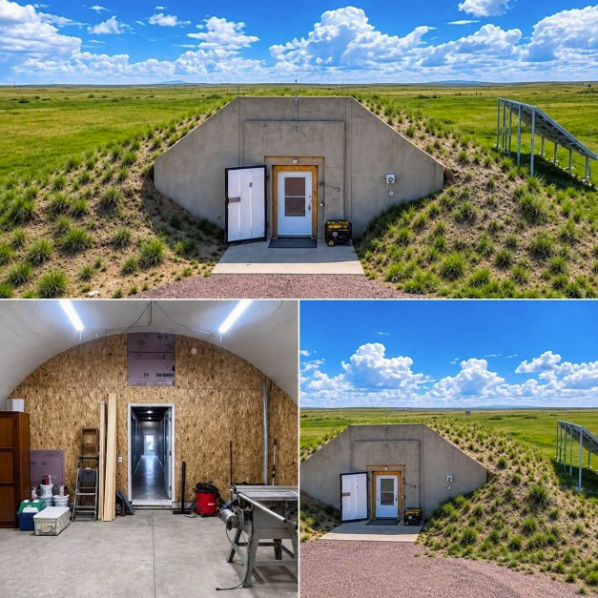
Once designed to store the machinery of war, these buried concrete bunkers near Edgemont in the Black Hills now serve a very different purpose. From above, they appear as quiet grassy mounds blending into the landscape, hiding their unusual second life.

These structures were once part of the Black Hills Army Depot, built to safely contain ammunition and military supplies. Their original purpose was protection and secrecy, but today that same design has made them attractive to people seeking unusual homes.

Inside, the transformation is striking. What used to be industrial storage spaces have been converted into private residences with kitchens, bedrooms, and living areas. Thick reinforced concrete walls now frame daily life instead of wartime logistics.

The bunkers offer a level of isolation that is difficult to find elsewhere. Residents value the silence, the dark skies, and the sense of separation from crowded modern living. For many, it feels like intentional withdrawal rather than isolation imposed by circumstance.

However, living underground is not simple. Moisture control, ventilation, and temperature regulation require constant attention. Distance from towns and services also means residents must be highly self-sufficient and prepared for unexpected challenges.

Despite these difficulties, the appeal is strong for those drawn to adaptive reuse and unconventional housing. The combination of history and privacy creates a lifestyle that feels both rugged and deeply personal, shaped by the structure itself.

The original military purpose of the bunkers adds emotional weight to the experience. Living inside them feels like inhabiting a piece of history that has been carefully repurposed, where past conflict has been replaced with quiet domestic life.

In the end, these underground homes represent reinvention at its most literal. What was once built for war now shelters everyday families, turning spaces of destruction into places of shelter, reflection, and unexpected peace.

Friday, September 25, 2026

Doctor Lifted His Pant Leg

by

What seemed like an ordinary case of influenza nearly turned into a tragedy for a 12-year-old boy whose life was saved thanks to a doctor’s quick thinking and attention to an unusual symptom.

The case, shared by Taiwanese pediatrician Dr. Luo Shixuan, serves as a reminder that not every recurring fever is “just the flu.”

The boy had recently recovered from a cold and his fever had subsided. However, not long afterward, the fever suddenly returned and became severe again.

Because influenza was circulating widely at the time, the symptoms initially appeared consistent with a typical flu infection. But during the examination, Dr. Luo noticed something that concerned him.

The child seemed unusually weak and exhausted.

Rather than immediately assuming it was influenza, the doctor asked the boy’s mother whether he had complained about any other symptoms.

That’s when she remembered that her son had mentioned pain in one of his legs earlier that morning.

Dr. Luo asked the boy to roll up his pant leg.

What he saw immediately raised alarm bells.

The boy’s shin was swollen, red, and extremely tender to the touch. The appearance suggested that something much more serious than influenza might be developing beneath the surface.

Several dangerous conditions came to the doctor’s mind, including severe soft-tissue infection and other life-threatening bacterial illnesses.

Without waiting for flu testing, he made a decision.

He urgently instructed the family to go directly to the emergency department of a major hospital.

Upon arrival at the hospital, doctors discovered that the boy’s blood pressure had dropped to a critically low level.

He was immediately treated with powerful antibiotics and admitted to the intensive care unit (ICU).

The child remained in intensive care for three days as doctors worked to stabilize his condition.

Fortunately, treatment was started in time, and he eventually recovered.

Emergency physicians later believed the boy’s condition was consistent with Toxic Shock Syndrome (TSS), a rare but potentially deadly complication caused by bacterial toxins entering the bloodstream.

The condition can progress rapidly and may lead to:

Without prompt treatment, the consequences can be fatal.

Reflecting on the case, Dr. Luo emphasized that medicine is not only about laboratory tests and technology.

Sometimes, experience, careful observation, and asking one extra question can reveal a life-threatening condition that might otherwise be missed.

Had the boy simply been diagnosed with influenza and sent home, the outcome could have been very different.

A recurring fever should never be ignored, especially when accompanied by unusual symptoms such as severe leg pain, swelling, redness, extreme fatigue, or signs that a child appears much sicker than expected.

In this case, a simple examination of a painful leg helped uncover a potentially deadly infection and may have saved a young boy’s life.

This image knows your personality—what

by

Have you ever wondered why two people can look at the same image and see two completely different things? This isn’t just a trick of the light; it’s a deep dive into the psychology of perception. Our brains are wired to prioritize information based on our current emotional state, past experiences, and core personality traits.

When you look at a complex optical illusion like this one—composed of a lion, birds, fish, a snake, and even an eagle—your subconscious mind “picks” the animal that resonates most with your internal frequency. This phenomenon is often linked to the Rorschach effect, where ambiguous images serve as a mirror for the viewer’s soul.

In this guide, we will break down what each animal signifies. Whether you spotted the king of the jungle or a soaring eagle first, your choice reveals a fascinating “hidden flaw” that might be holding you back from your full potential.

If the Lion at the top of the head was the first thing you noticed, you possess a powerful, commanding presence. You are likely a natural leader, someone who isn’t afraid to take charge of a situation. However, the “worst flaw” associated with the lion is The Need for Control.

Impatience: You want results yesterday. Because you see the big picture so clearly, you often get frustrated with those who move slower than you.

The Weight of Responsibility: You feel like everything rests on your shoulders, which can lead to burnout.

Stubbornness: Once you’ve set your mind on a path, it’s nearly impossible to sway you, even if the path is no longer viable.

The Growth Tip: Practice the art of delegation. Trusting others doesn’t diminish your power; it expands your reach.

Did your eyes land on the Eagle (forming the cheek and eye area)? If so, you are a visionary. You have “eagle eyes” for detail and a high-altitude perspective on life. Your flaw? High-Functioning Perfectionism.

Critical Nature: You have high standards for yourself, but you also project those impossible standards onto others.

Detachment: You may sometimes seem “above it all,” leading people to feel you are cold or unapproachable.

Over-Analysis: You might spend so much time looking for the “perfect” opportunity that you miss the “good” ones right in front of you.

The Growth Tip: Remember that “done is better than perfect.” Allowing yourself to be vulnerable is a sign of strength, not weakness.

If the smaller Birds scattered throughout the face (forming the eyebrows and nose) caught your eye first, you are a dreamer and a creative spirit. You value freedom above all else. Your flaw is Inconsistency.

Avoidance of Conflict: Like a bird, you tend to fly away when things get difficult or emotionally heavy.

Lack of Focus: You have “shiny object syndrome,” jumping from one project to another without finishing the first.

Emotional Fragility: You are highly sensitive to the energy around you, which can leave you feeling drained in social settings.

The Growth Tip: Practice grounding exercises. Structure and routine are not cages; they are the foundations that allow your creativity to truly soar.

Spotted the Fish (forming the nose and eye bridge) first? You are likely a very intuitive, calm, and empathetic person. You swim through the currents of life with a certain grace. Your flaw is Extreme Idealism.

Naivety: You want to believe the best in everyone, which can unfortunately lead to you being taken advantage of.

Escapism: When reality becomes too harsh, you “dive deep” into your own world, ignoring the problems that need solving.

Passivity: You might wait for things to happen to you rather than making them happen.

The Growth Tip: It is okay to be kind, but ensure your kindness has boundaries. Learn to say “no” without feeling guilty.

The Snake (nestled near the chin/neck area) is often associated with wisdom and transformation. If this was your first find, you are incredibly resourceful and observant. Your flaw? A Tendency Toward Guardedness.

Trust Issues: You rarely show your hand. You are constantly scanning for threats, which makes it hard for people to get close to you.

Sharp Tongue: When you feel cornered, you might “bite” with words that leave a lasting sting.

Over-Thinking: You analyze every interaction for hidden meanings, often creating problems where none exist.

The Growth Tip: True wisdom involves knowing when to shed your skin and let people see the real you. Vulnerability is the only bridge to deep connection.

In psychology, our “flaws” are often just our greatest strengths pushed to an extreme. The Lion’s control is also his leadership; the Fish’s idealism is also their compassion. By identifying which animal your brain prioritized, you aren’t just finding a weakness—you are finding your next area of personal evolution.

What did you see first? Does the description match how you feel in your daily life? Share your results in the comments below and see what your friends discovered about themselves!

Note: These personality tests are designed for entertainment and self-reflection. While they offer fascinating insights into the human mind, they are not a substitute for professional psychological evaluation. Use them as a fun tool to spark conversation and look at yourself through a different lens.