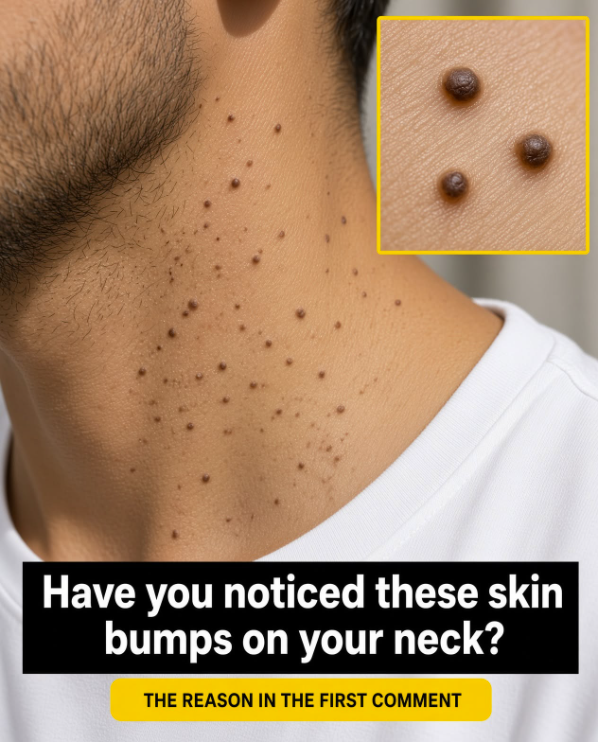
Have you ever looked in the mirror or run your fingers along your neckline only to feel tiny, raised patches of tissue? If you look , you will notice a common visual representation of these harmless, small bumps that frequently appear around the neck, underarms, and areas where fabric or skin rub together regularly.
While they might look alarming at first glance, these small growths are exceptionally common. They are medically known as acrochordons, but most people simply refer to them as benign tissue growths or friction bumps. Understanding why they form, how to care for your skin, and when to seek a routine checkup can save you unnecessary worry.
These tiny developments are essentially small bundles of loose collagen fibers and blood vessels trapped inside thicker pieces of skin. They do not appear overnight without reason. Several factors contribute to their sudden or gradual appearance:
Friction and Friction Alone: The most prominent cause is mechanical rub. This occurs when skin rubs against skin, or when tight clothing, heavy necklaces, or collars constantly chafe the area. This explains why they are heavily concentrated on the neck and underarms.
Natural Changes Over Time: As individuals mature, the structural integrity of the skin changes. It loses some elasticity, making it more prone to these small formations. They are highly common in adults over the age of thirty.
Metabolic and Genetic Ties: Research shows a strong correlation between these harmless bumps and a body’s metabolic efficiency. Individuals with higher glucose sensitivity or family histories of similar skin traits often notice them appearing in larger clusters.
If you notice these bumps, your primary focus should be minimizing further irritation. Because they are completely benign, you do not need to panic. Instead, adopt a gentle daily routine to keep the surrounding tissue calm and comfortable.
Since friction is the ultimate trigger, changing your wardrobe habits can make a massive difference. Opt for smooth, breathable fabrics like cotton or silk. Avoid stiff collars, tight synthetic activewear, and heavy jewelry that rests directly on the affected areas.
When washing your neck and underarms, skip the aggressive scrubbing brushes and harsh physical exfoliants. Use a mild, fragrance-free cleanser and pat the area dry with a soft towel rather than rubbing it vigorously.
Keeping the skin barrier hydrated helps reduce the friction caused by dry skin scraping against itself. Look for non-comedogenic lotions containing ceramides or hyaluronic acid to support optimal skin health without clogging pores.
It can be incredibly tempting to try DIY solutions or viral home remedies to remove these small bumps yourself. However, dermatologists strongly advise against using scissors, strings, or unverified chemical liquids at home.
Attempting to scratch or cut these growths off can damage the surrounding healthy skin tissue, leading to unwanted marks or surface imperfections. Furthermore, unsterile environments introduce unwanted external elements to the open area, turning a minor cosmetic issue into a real irritation.
If you want them removed for personal comfort or cosmetic preference, a visit to a certified skin specialist is the safest path. Specialists use precise, quick methods in a controlled environment:
Cryo-care: Utilizing cold temperatures to safely freeze the tissue, allowing it to drop off naturally within days.
Precision Trimming: Utilizing sterile medical tools to carefully remove the growth at its base without affecting the surrounding layers.
Thermal Care: Using gentle, targeted heat to seal the base cleanly, ensuring swift recovery.
As seen, these variations are usually uniform in color and tiny in size. However, it is always a good practice to have a professional evaluate any new development on your body. Schedule a routine visit if you notice:
The bump grows rapidly over a short period.
It changes color significantly, turning dark purple, black, or multi-toned.
The area becomes tender, painful, or bleeds due to accidental catching on clothing.
Prioritizing your skin health means staying informed, keeping tissue moisturized, and letting the experts handle removals safely.



0 comments:
Post a Comment