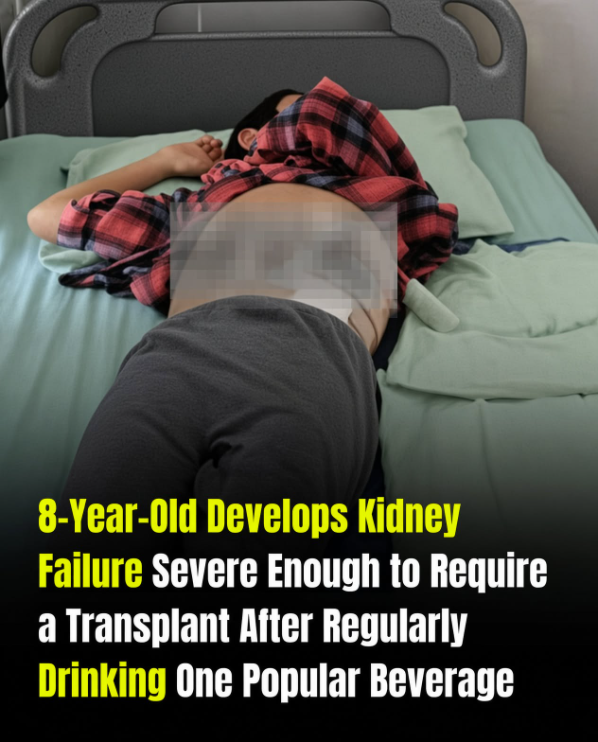
An 8-year-old boy from Wuhan, China, has become the focus of a cautionary health story after being diagnosed with chronic kidney failure and advanced uremia, a condition so severe that doctors reportedly had to consider a kidney transplant.
What shocked doctors most was not his age, but a daily habit that had gone unchecked for years.
According to reports, the boy, identified as Xiaoh Hao, rarely drank plain water.
Instead, he developed a habit of drinking two to three bottles of soda every day, often using soft drinks to quench his thirst.
His parents, busy with work, did not pay much attention to his drinking habits. Over time, sugary beverages became a normal part of his daily routine.
About six months before his diagnosis, the boy began showing subtle symptoms.
He lost interest in food, frequently complained of itchy skin, and developed mild swelling around his eyes and face.
Because the symptoms seemed minor, his family assumed he simply needed more rest and did not suspect a serious illness.
Everything changed when he suddenly developed severe abdominal pain and pain while urinating.
His mother also noticed blood and excessive foam in his urine, prompting an urgent visit to the hospital.
Medical tests revealed that the boy’s creatinine level had risen above 1,000 micromoles per liter, indicating severe kidney dysfunction.
Further examinations suggested that he had been living with chronic kidney disease for some time and had already progressed to uremia, one of the most serious complications of kidney failure.
Doctors also found that the child had developed type 2 diabetes, a condition that has become increasingly common among children with unhealthy dietary habits.
Although doctors were able to stabilize his condition, long-term treatment remained a major challenge.
Health experts emphasize that soda does not directly cause kidney failure overnight.
However, frequent consumption of sugary beverages may contribute to:
Over time, these conditions can place enormous stress on the kidneys and other organs.
Doctors say parents should pay attention if a child experiences:
Early detection can significantly improve treatment outcomes.
Medical experts stress that soft drinks may be enjoyed occasionally, but they should never replace water as a child’s primary beverage.
The case serves as a reminder that kidney disease and type 2 diabetes are no longer conditions seen only in adults. Poor dietary habits established during childhood can have serious consequences later in life.
For parents, monitoring what children drink may be just as important as monitoring what they eat.



0 comments:
Post a Comment