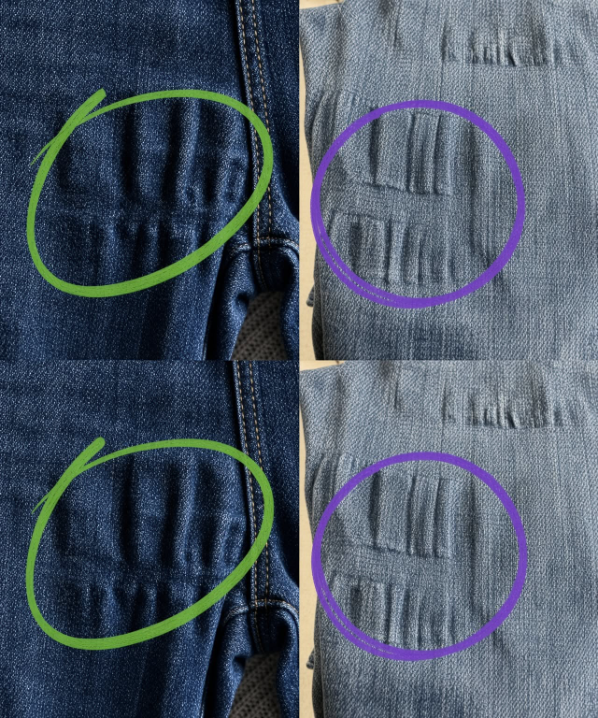
Have you ever pulled your favorite pair of pants out of the laundry, only to notice an odd, wavy distortion across the thighs, lap, or rear? You are certainly not alone. This frustrating phenomenon is a common textile failure that plagues millions of wardrobes worldwide. If you look at the example provided , you can clearly see these distinct, horizontal or vertical puckers forming rectangular patterns where the fabric has completely lost its flat, smooth texture.
This deep-dive guide covers why this structural breakdown happens, how everyday laundry habits accelerate the damage, and the steps you can take to prevent or manage it.
To understand why the fabric is distorting, you have to look at how modern denim is constructed. Traditional denim is made from 100% rigid cotton woven in a twill pattern. While incredibly durable, pure cotton lacks flexibility. To make pants more comfortable, form-fitting, and flexible, apparel brands began incorporating synthetic elastic fibers into the weave. These fibers are commonly known as:
Typically, these elastic threads run horizontally along the weft yarns of the fabric. They act like microscopic rubber bands woven right into the cotton core. When you sit, bend, or move, the elastic stretches out; when you stand up, it contracts, allowing the garment to snap back into its original shape.
Elastic breakdown rarely happens from a single day of wear. Instead, it is usually a cumulative result of improper garment maintenance, excessive stress, or poor fabric composition.
Synthetic fibers like elastane are highly sensitive to thermal exposure. When you wash your clothes in hot water or run them through a standard tumble dryer cycle on high heat, you are essentially melting or weakening the plastic components inside the yarn. Once the core structure reaches a critical temperature, it loses its “memory” and capability to retract.
It might seem counterintuitive, but fabric softeners are incredibly harmful to stretch activewear and flexible denim. Fabric softeners work by leaving a thin, chemical coating over the fibers to make them feel smoother. This chemical buildup penetrates the core of stretch yarns, causing the elastane to swell, degrade, and lose its tensile strength over time.
High-stress areas—such as the upper thighs, the knees, and the seat—experience constant stretching throughout the day. When a garment is a bit too tight or subjected to hours of sitting, the elastic is pulled to its absolute limit. Combined with the natural friction of movement, the stressed fibers eventually snap under pressure.
Not all stretch materials are built equal. Budget-friendly clothing lines often utilize low-grade elastane that lacks proper heat stabilization. Furthermore, jeans with excessive stretch percentages (above 3% to 5%) are far more prone to widespread puckering compared to premium “comfort stretch” denim which contains only 1% to 2% elastane.
The short answer is: once the internal elastic fibers are severed or completely melted, they cannot be woven back together. The damage visible in image_311a60.jpg represents a structural breakdown of the material itself.
However, if the puckering is minor or just beginning, you can try a temporary cosmetic reset using controlled moisture and thermal compression.
Dampen the Area: Lightly mist the rippled fabric with clean water or a highly diluted mix of water and plain white vinegar.
Set Your Iron: Turn your clothing iron to a low or medium synthetic setting. Never use maximum heat, as this will worsen the issue.
Use a Pressing Cloth: Place a clean cotton towel or pillowcase over the ripples to shield the denim from direct metal contact.
Iron Firmly: Press down firmly and glide the iron across the ripples, attempting to flatten the excess cotton back into position.
Note: This method simply flattens the loose cotton fibers temporarily. As soon as you wear the pants again or wash them, the lack of underlying elastic support will cause the ripples to return.
If you want to protect your clothing investment and ensure your favorite pairs maintain their smooth profile, you must adjust how you handle laundry day.
Always look at the textile content before throwing items into the machine. If a garment contains even 1% spandex or elastane, treat it as a delicate item.
Always select the coldest water setting available on your washing machine. Cold water protects the synthetic bonds from thermal degradation and prevents premature aging of the fabric.
Before tossing your denim into the wash basin, flip them completely inside out. This simple step minimizes structural friction against the outer face of the fabric and protects the weave from getting caught on buttons, zippers, or the washing machine agitator.
Ditch the liquid softeners and commercial dryer sheets. If you need to neutralize odors or soften rigid textures naturally, add half a cup of plain distilled white vinegar to the rinse compartment instead.
The simplest way to completely avoid the issue shown is to keep your stretch clothing far away from the mechanical tumble dryer. Instead, lay your pants flat on a drying rack or hang them securely by the waistband to air dry in a well-ventilated space out of direct sunlight.
If you are tired of dealing with elastic failure, it might be time to rethink the types of fabric you purchase. The table below outlines how different compositions handle wear, tear, and long-term maintenance.
To reduce the likelihood of encountering fabric distortion in the future, follow these helpful shopping guidelines:
Check the Fiber Breakdown: Look for options that contain between 98% cotton and 2% elastane (or less). This ratio provides a modest amount of comfortable give without sacrificing the structural stability of the cotton weave.
Feel the Weight: Heavyweight fabrics naturally resist distortion much better than paper-thin materials. Opt for a sturdier, weightier hand-feel whenever possible.
Choose the Right Size: Avoid purchasing stretch clothing that feels excessively tight in the changing room with the expectation that it will stretch out. Excessive, continuous tension is a primary catalyst for fiber breakage.
By understanding the delicate nature of synthetic textile blends and utilizing a gentle laundry routine, you can keep your wardrobe looking pristine, flat, and perfectly fitted for years to come.



0 comments:
Post a Comment